






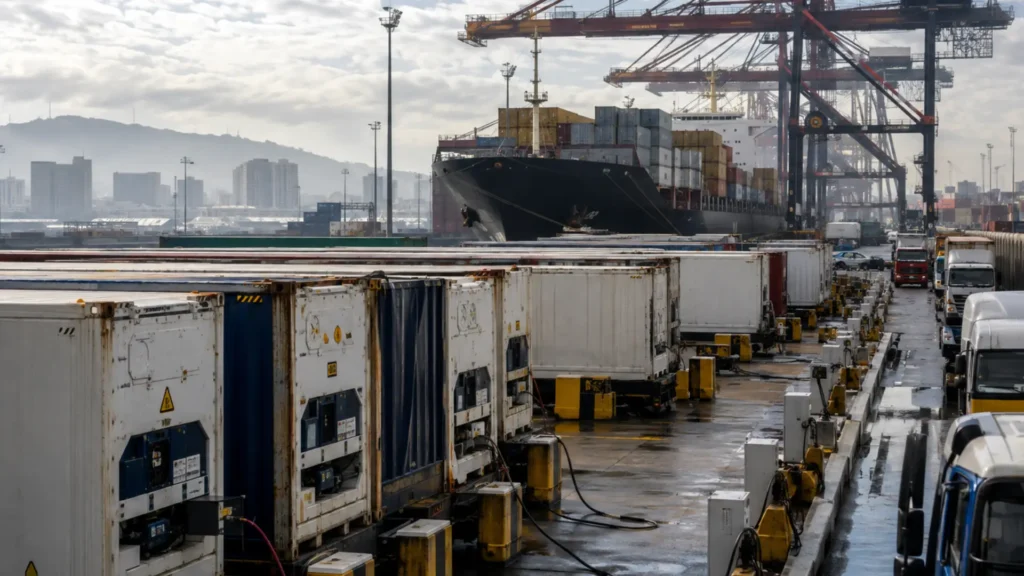
Reefer Congestion at South African ports creates a very different risk from ordinary container delays. A dry container may arrive late and create additional cost or inventory pressure. A refrigerated container carrying citrus, grapes, meat, dairy products or other temperature-sensitive cargo may lose value while it waits.
That makes time, temperature, power availability and operational coordination critical throughout the cold chain.
South African exporters operate within one of the world’s important agricultural and food-export supply chains. During peak export periods, large volumes of refrigerated containers move between farms, packhouses, cold stores, depots and ports before travelling to international markets.
When port congestion interrupts that flow, exporters need more than a delayed-shipment plan. They need a cold-chain contingency plan that protects the cargo while schedules change.
Quick answer: Exporters can reduce reefer congestion risk by preparing refrigerated containers early, completing PTIs before loading, confirming temperature and ventilation settings, protecting power continuity, monitoring port conditions, planning alternative staging capacity and maintaining enough time in the export schedule to respond when terminal conditions change.
What Is Reefer Congestion?
Reefer Congestion occurs when refrigerated containers cannot move through a port, terminal, depot or transport network at the expected rate.
The congestion may affect trucks trying to deliver export reefers, containers waiting for terminal acceptance, units requiring power connections, vessels waiting to berth or cargo that must remain in staging areas for longer than originally planned.
Unlike ordinary container congestion, reefer delays introduce another critical variable: the cargo must remain within the correct environmental conditions throughout the interruption.
Why Reefer Containers Need Special Attention
A refrigerated container acts as a controlled transport environment. Its refrigeration unit, temperature controller, airflow system, sensors and power supply work together to maintain the conditions required for the cargo.
If congestion extends the journey, exporters need confidence that the container can continue performing reliably for longer than originally expected.
That makes preparation before loading particularly important.
Why Reefer Congestion Is a Growing Export Risk
Refrigerated exports often operate within narrow commercial and biological timeframes. Fresh produce continues to age after harvesting, while frozen and chilled goods depend on stable environmental conditions throughout transportation.
A delay therefore creates several overlapping risks rather than one simple scheduling problem.
Longer Truck Waiting Times
When terminals restrict reefer acceptance or struggle with congestion, trucks may wait substantially longer than planned before delivering containers.
In late August 2026, Freight News reported significant disruption to citrus exports at Durban Gateway Terminal, including reports of reefer trucks waiting for up to 30 hours and a temporary halt in reefer acceptance.
These conditions demonstrate why exporters should consider truck waiting time as part of cold-chain planning rather than only a transport-efficiency issue.
Terminal Acceptance Restrictions
A terminal may temporarily control or restrict the acceptance of refrigerated containers when operational conditions make additional inflows difficult to manage.
When that happens, an exporter needs another safe place to hold the reefer without breaking the cold chain.
Vessel Delays and Rolled Cargo
A vessel may arrive late, wait for a berth or alter its schedule. In some circumstances, cargo may also miss the intended sailing and require a later vessel.
For refrigerated cargo, every additional day increases the importance of power, equipment reliability, temperature monitoring and product shelf-life calculations.
Peak Export Volumes
Seasonal agricultural exports can place significant pressure on reefer supply chains because many producers need containers, transport capacity, cold storage and vessel space within the same period.
A relatively small operational disruption can therefore affect a large number of refrigerated movements at once.
Reefer Congestion and Cold-Chain Integrity
Cold-chain integrity means maintaining the required environmental conditions throughout the cargo journey.
Temperature plays a major role, but exporters also need to consider airflow, ventilation, humidity where relevant, cargo loading patterns, equipment performance and the continuity of electrical power.
Temperature Stability
The reefer must maintain the temperature settings appropriate for the specific commodity and export programme.
Exporters should not use a generic temperature assumption across different products. Commodity requirements, shipping protocols and market conditions determine the correct settings.
Airflow Inside the Reefer
A reefer unit cannot protect cargo effectively if loading practices block the intended airflow.
Correct pallet positioning, load height and airflow clearance help the refrigeration system circulate conditioned air throughout the container.
Power Continuity
Reefer congestion can extend the amount of time a container spends waiting at a depot, terminal or staging area. During that period, exporters need suitable electrical capacity to keep the refrigeration unit operating when the container requires a power connection.
Shipping & General’s container depot includes 20 reefer plug points, providing capacity to stage refrigerated containers over weekends, public holidays or according to customer requirements.
Why a Reefer PTI Matters Before Congestion Starts
Exporters cannot control port congestion, but they can reduce the likelihood that a technical container problem adds another delay.
A professional Pre-Trip Inspection, or PTI, allows technicians to assess the reefer before cargo loading starts.
The inspection can identify refrigeration, electrical, sensor, airflow, structural and controller problems while the container remains in an environment where technicians can still address them.
Technical Reliability Becomes More Important During Reefer Congestion
A container originally expected to spend a short period between loading and vessel connection may need to operate for considerably longer when schedules change.
Reliable equipment therefore provides an important layer of protection when the logistics chain becomes unpredictable.
For a detailed explanation of the inspection process, read Shipping & General’s Complete Guide to Reefer Container Pre-Trip Inspections.
Cold-chain principle: A PTI does not prevent port congestion. It reduces the risk that an avoidable equipment problem compounds an already delayed export movement.
Reefer Congestion Makes Early Container Preparation Essential
Waiting until immediately before loading to prepare a reefer container creates unnecessary risk, particularly during busy export periods.
If technicians identify a fault during a late PTI, the exporter may need urgent repairs or a replacement unit at the same time that reefer availability and logistics capacity already face pressure.
Book the PTI Before the Loading Window Becomes Critical
Allow enough time between inspection and cargo loading for technicians to investigate and repair faults if necessary.
Confirm Food-Grade Cleanliness
A technically sound reefer may still be unsuitable for food cargo if residues, odours or contamination remain from a previous load.
Food-grade washing therefore forms an important part of reefer preparation for relevant perishable commodities.
Complete Repairs Before Loading
When technicians identify a fault, completing repairs before loading avoids sending valuable cargo into an already uncertain logistics environment inside a compromised unit.
Shipping & General operates a PPECB-certified reefer workshop, washing and PTI facility within its container depot. The company states that the facility passed a 100% food-grade audit and uses IICL-certified technical expertise for reefer operations.
Why PPECB-Certified Reefer Facilities Matter
South Africa’s perishable export industry operates within established cold-chain and food-quality requirements. Exporters therefore need facilities and service providers that understand the operational requirements around refrigerated export containers.
A PPECB-certified reefer facility provides a structured environment for preparing refrigerated containers according to recognised processes before they enter the export chain.
For more detail on the role of certified facilities, read Why PPECB-Certified Reefer Facilities Matter in 2026.
The Hidden Risk of Split Reefer Operations
Some reefer preparation processes involve several different facilities. One provider may wash the container, another may conduct the PTI and another may complete repairs.
Each additional movement adds another vehicle booking, handover and potential delay.
During periods of Reefer Congestion, those additional movements become more difficult to coordinate because transport and depot capacity may already face pressure.
One Depot Can Reduce Unnecessary Movements
An integrated facility that combines PTI, washing, repairs, container handling and reefer staging can reduce the number of operational handovers before loading.
This does not remove wider port risk, but it helps exporters simplify the parts of the cold chain they can control.
What Exporters Should Check Before a Reefer Leaves the Depot
Before releasing a refrigerated container for loading or onward transport, exporters should confirm the key operational requirements for the specific cargo and journey.
- Has the reefer completed the required PTI?
- Did technicians resolve any identified faults?
- Does the container meet the required hygiene standard?
- Has the exporter confirmed the correct temperature set point?
- Are ventilation requirements correct for the commodity?
- Can airflow move correctly through the planned load?
- Are seals and doors in suitable condition?
- Are alarms and controllers operating correctly?
- Has the exporter confirmed the loading date and port cut-off?
- Does the logistics plan include enough contingency time?
This preparation becomes particularly important during peak season because last-minute replacement containers, repairs or additional transport movements may become harder to secure.
Monitor Port Conditions Before Dispatching the Reefer
An exporter should not assume that yesterday’s terminal conditions remain unchanged today.
Terminal acceptance rules, truck appointment availability, vessel schedules and operational restrictions can change as congestion develops or eases.
Before dispatching a reefer towards the port, the logistics team should confirm the latest operational information with the relevant parties and make sure the terminal can accept the container within the planned window.
Practical rule: During Reefer Congestion, do not dispatch a temperature-sensitive export container simply because the original schedule says it should move. Confirm that the next stage of the cold chain can receive and protect it first.
Prepare Your Reefer Before Peak Export Pressure
Shipping & General supports refrigerated container operations through its PPECB-certified reefer workshop, washing and PTI facility, on-site technical expertise, container handling and reefer plug-point capacity. Preparing the container correctly before loading gives exporters one less uncertainty to manage when the wider logistics network comes under pressure.
What to Do When Reefer Acceptance Is Restricted
When a terminal restricts or temporarily stops reefer acceptance, exporters need to protect the cold chain before they focus on the original delivery schedule.
The first priority is to confirm where the reefer can remain safely powered, monitored and accessible until the terminal can receive it.
Do Not Send the Reefer Without a Confirmed Receiving Window
Dispatching a reefer toward a congested terminal without a confirmed acceptance window can move the risk from the depot to the roadside.
Exporters should confirm terminal status, appointment availability, stack acceptance and the intended vessel cut-off before releasing the container from a protected staging facility.
Keep the Reefer on Power Where Required
If the container needs to wait, suitable reefer plug capacity becomes critical. The refrigeration unit must continue operating according to the commodity requirements while the shipment remains delayed.
Shipping & General’s container depot includes reefer plug-point capacity that can support refrigerated container staging while exporters wait for the next confirmed movement.
Keep Access to the Container
A reefer that remains in a controlled depot environment is generally easier to inspect, monitor and service than a unit that becomes trapped inside a congested transport queue.
Where circumstances allow, exporters should favour staging options that keep the container accessible to technicians if a fault or alarm develops.
Reefer contingency rule: If the next stage of the journey cannot safely receive the container, keep the reefer where power, monitoring and technical support remain available.
Power Continuity During Reefer Congestion
Power continuity sits at the centre of cold-chain protection when schedules change.
A refrigerated container relies on electrical power while stationary and appropriate power arrangements while moving. Exporters therefore need to understand how the reefer will remain operational at every stage of an extended delay.
Check Plug Capacity Before You Need It
During peak export periods, reefer plug points can become a scarce operational resource. Exporters should identify suitable staging capacity before congestion reaches a critical level.
Monitor Extended Waiting Periods
The longer a reefer remains staged, the more important regular monitoring becomes. Exporters should confirm that the refrigeration unit continues operating according to the approved settings and that no alarms require investigation.
Plan for Weekends and Public Holidays
A delay late in the week can quickly extend across a weekend or public holiday. Exporters should confirm whether the staging facility can provide continuous power, monitoring and access during these periods.
The First 24 Hours of Reefer Congestion
When an exporter learns that port conditions may delay a refrigerated container, the first 24 hours should focus on protecting the cargo and establishing the latest operational facts.
Confirm Terminal and Vessel Status
Confirm whether the terminal is accepting reefers, whether truck bookings remain available, whether the intended vessel is still on schedule and whether cut-off times have changed.
Confirm the Container’s Technical Status
Check that the reefer has completed the required PTI, that technicians resolved any faults and that the refrigeration unit continues operating correctly.
Confirm Commodity Settings
Reconfirm temperature, ventilation and other relevant settings against the approved requirements for the specific commodity and export programme.
Confirm the Next Safe Location
If the terminal cannot accept the container, identify where the reefer can remain powered and monitored without unnecessary additional handling.
Update the Export Team
The exporter, transporter, depot, packhouse, cold store, shipping line and customer-facing teams should work from the same confirmed information.
24-hour priority: Protect temperature integrity first, then confirm the vessel, terminal, transport and staging plan before the reefer moves again.
The Next 48 Hours: Build a Reefer Congestion Contingency Plan
If the original sailing plan no longer looks achievable, exporters should move from short-term monitoring to structured contingency planning.
Reconfirm the Intended Sailing
Check whether the reefer can still make the intended vessel and whether the carrier has adjusted cut-off times, stack dates or terminal instructions.
If the cargo will miss the sailing, identify the next realistic vessel rather than continuing to plan around a date that no longer applies.
Review Product Shelf-Life Exposure
Fresh produce exporters should consider the additional delay as part of the total post-harvest journey. The logistics team should work with the relevant quality, technical and commercial specialists to assess whether the revised transit period remains suitable for the commodity and destination market.
Check Alternative Staging Capacity
If congestion persists, confirm whether sufficient powered space remains available at the current depot or whether another suitable facility may be required.
Review Transport Availability
A revised terminal acceptance window may require a new truck movement. Transporters need enough notice to adjust driver schedules, vehicle allocations and booking plans.
The 72-Hour Reefer Congestion Plan
When a reefer delay continues beyond 48 hours, the exporter should treat it as a broader cold-chain and commercial risk.
Escalate Commodity Risk
Quality and technical teams should review whether the additional waiting period affects product condition, shelf-life expectations or market suitability.
Review Customer Commitments
Commercial teams should identify orders that may arrive later than planned and communicate revised expectations where necessary.
Monitor Additional Logistics Costs
Extended staging, additional transport movements, plug-point usage, inspections and vessel changes may create extra costs. Management should compare these costs against the commercial value of protecting the cargo and preserving the export programme.
Confirm a New End-to-End Plan
Once the original schedule falls away, create a new working plan from the current location through to vessel loading and final destination. Everyone involved should understand the revised milestones.
Protecting Fruit Quality During Reefer Congestion
For fresh-produce exports, congestion creates a particular challenge because cold-chain management can slow deterioration but cannot stop biological ageing completely.
Exporters therefore need to protect both temperature integrity and total journey time.
Avoid Unnecessary Temperature Changes
The exporter should maintain the approved commodity settings unless authorised technical instructions require a change. Frequent unnecessary adjustments can create additional uncertainty.
Protect Airflow
Proper airflow remains essential throughout an extended journey. Cargo should remain loaded according to the approved packing pattern so conditioned air can circulate effectively.
Keep Accurate Records
Record key dates, reefer settings, PTI information, alarm events, plug-in periods, transport movements and terminal milestones. Good records improve operational visibility and support later investigations if a quality issue arises.
Reefer Congestion and Vessel Delays
A refrigerated container can be technically ready, correctly packed and safely staged but still face risk if the vessel does not arrive or berth according to schedule.
Monitor Vessel ETA Changes
Exporters should track updated vessel information rather than rely only on the original booking confirmation.
Watch Stack and Cut-Off Changes
When vessel schedules move, terminals and shipping lines may adjust stack-opening or cut-off arrangements. These changes can affect when the exporter should dispatch the reefer.
Prepare for a Rolled Container
If a reefer misses the planned sailing, exporters should quickly confirm the next available vessel, additional staging requirements and whether the revised transit period remains appropriate for the cargo.
Should Exporters Consider Alternative Routing?
Alternative routing may sometimes appear attractive when congestion affects a port, but changing gateways can create new transport, timing, equipment and commercial considerations.
The decision should compare the full logistics impact rather than the port delay alone.
Consider the Inland Transport Distance
Routing through another port may add significant road distance between the packhouse, cold store or depot and the export terminal.
Confirm Vessel and Market Connections
A different port only helps if suitable vessel capacity and destination-market connections exist within a useful timeframe.
Check Reefer Infrastructure
The alternative route must still provide the necessary cold-chain infrastructure, including suitable staging, power, transport and handling capacity.
Routing principle: An alternative port is only an improvement if the complete cold-chain journey becomes more reliable, not simply because the original terminal is congested.
What Should Exporters Monitor During Reefer Congestion?
Effective reefer management depends on visibility across both the equipment and logistics journey.
Reefer Technical Status
- Temperature set point.
- Actual operating temperature where available.
- Ventilation settings where applicable.
- Controller and alarm status.
- Power connection status.
- Any technical interventions or repairs.
Logistics Status
- Current container location.
- Terminal acceptance status.
- Truck appointment status.
- Vessel ETA.
- Stack-opening and cut-off dates.
- Confirmed vessel allocation.
- Expected next movement.
Commercial Status
- Customer delivery expectations.
- Market arrival window.
- Potential additional logistics costs.
- Product shelf-life considerations.
- Insurance or claims documentation if relevant.
Reefer Congestion Checklist for Exporters
Before Loading
- Complete the required PTI.
- Resolve technical faults.
- Confirm food-grade cleanliness where required.
- Confirm commodity temperature settings.
- Confirm ventilation requirements.
- Check seals, doors and structural condition.
- Confirm loading pattern and airflow requirements.
Before Dispatch to Port
- Confirm terminal reefer acceptance.
- Confirm truck appointment or access requirements.
- Check vessel ETA.
- Confirm stack-opening and cut-off times.
- Confirm an alternative staging location.
- Check reefer plug capacity if the container must wait.
During a Delay
- Keep the reefer powered where required.
- Monitor temperature and alarms.
- Record plug-in and unplug times.
- Keep the container accessible to technicians where possible.
- Confirm revised vessel arrangements.
- Review product shelf-life exposure.
- Update customers and commercial teams.
Before Final Port Delivery
- Reconfirm terminal acceptance.
- Reconfirm the vessel and cut-off.
- Check reefer operating status.
- Confirm transport availability.
- Record the final dispatch time.
Why Integrated Reefer Support Matters During Congestion
Reefer Congestion becomes harder to manage when washing, PTI, repairs, staging, transport and port delivery operate as separate disconnected activities.
Every additional handover can introduce another delay, additional transport movement or communication gap.
An integrated reefer facility can simplify preparation by combining technical inspection, repairs, washing, container handling and powered staging in one operational environment.
Shipping & General provides reefer workshop, PTI, washing and related value-added services alongside container depot and logistics capabilities.
Build Reefer Resilience Before Peak Export Season
The most effective Reefer Congestion plan starts before congestion appears.
Exporters should understand where they can stage containers, how much reefer plug capacity they may need, which technicians can respond to faults, how transporters will handle revised terminal windows and who will make commercial decisions when cargo misses the intended sailing.
Early PTIs, reliable equipment, accurate documentation, powered staging capacity and clear communication do not eliminate port disruption. They reduce the number of additional problems that can develop while exporters wait for normal operations to recover.
Key takeaway: During Reefer Congestion, protect the cold chain before protecting the schedule. Keep the container technically sound, powered where required, monitored and positioned where the next movement can happen safely when conditions improve.
Need More Flexibility for Your Reefer Operations?
Shipping & General supports refrigerated container movements with reefer PTIs, washing, technical support, container handling, powered staging and integrated landside logistics. Building these options into the export plan can provide valuable flexibility when port conditions change.
Frequently Asked Questions About Reefer Congestion
What is Reefer Congestion?
Reefer Congestion occurs when refrigerated containers cannot move through ports, terminals, depots or transport networks at the expected rate. Delays can affect terminal acceptance, truck movements, vessel schedules, powered staging and final export timing.
Why is Reefer Congestion more serious than ordinary container congestion?
Refrigerated cargo depends on controlled environmental conditions. When delays increase journey time, exporters need to maintain suitable temperature, airflow, power and monitoring while also protecting the commodity’s remaining shelf life.
What should exporters do when a terminal stops accepting reefers?
Exporters should avoid dispatching the container without a confirmed receiving window and identify a suitable staging facility where the reefer can remain powered, monitored and accessible until terminal acceptance resumes.
Why is a reefer PTI important before export?
A Pre-Trip Inspection helps identify technical, electrical, refrigeration, sensor, controller and structural problems before loading. This reduces the risk that an avoidable equipment fault compounds a port or vessel delay.
Can a reefer container stay at a depot while waiting for the port?
Yes, provided the facility can safely accommodate the container and provide the required power, monitoring, handling and technical support. Exporters should confirm capacity and operational requirements before they need emergency staging.
Why are reefer plug points important during congestion?
Reefer plug points allow refrigerated containers to remain electrically powered while stationary. This becomes particularly important when terminal acceptance, vessel schedules or transport movements are delayed.
How can exporters protect fruit quality during Reefer Congestion?
Exporters should maintain approved temperature and ventilation settings, protect airflow, monitor reefer performance, limit unnecessary handling and consider the additional waiting period when assessing the commodity’s total post-harvest journey and remaining shelf life.
What happens if a reefer misses its intended vessel?
The exporter should confirm the next available sailing, review staging and power requirements, update transport arrangements and assess whether the revised transit period remains suitable for the specific cargo and destination market.
Should exporters use another port when Reefer Congestion occurs?
Alternative routing can help in some cases, but exporters should compare the full cold-chain journey. Inland transport distance, vessel availability, market connections, powered staging capacity and additional handling can all affect whether another port creates a better outcome.
What should exporters monitor during a reefer delay?
Exporters should monitor container location, power status, temperature settings, alarms, technical interventions, terminal acceptance, truck bookings, vessel ETA, stack dates, cut-off times and the expected next movement.
How can exporters prepare for peak-season Reefer Congestion?
Exporters can prepare by booking PTIs early, confirming food-grade cleaning and repairs, identifying powered staging capacity, maintaining alternative transport and depot options, monitoring vessel and terminal conditions and creating a clear 24-hour, 48-hour and 72-hour contingency process.
How can Shipping & General support reefer exporters?
Shipping & General supports refrigerated container operations with reefer PTIs, food-grade washing, technical support, repairs, container handling, powered staging and integrated landside logistics solutions.
Protect Your Cold Chain Before Congestion Becomes Critical
Reefer Congestion is easier to manage when exporters have already prepared the container, confirmed powered staging options and established a clear response plan before port conditions deteriorate.
Shipping & General can support exporters with reefer PTIs, washing, technical services, container handling, reefer plug points and integrated logistics solutions designed to protect the cargo between depot, port and vessel.