






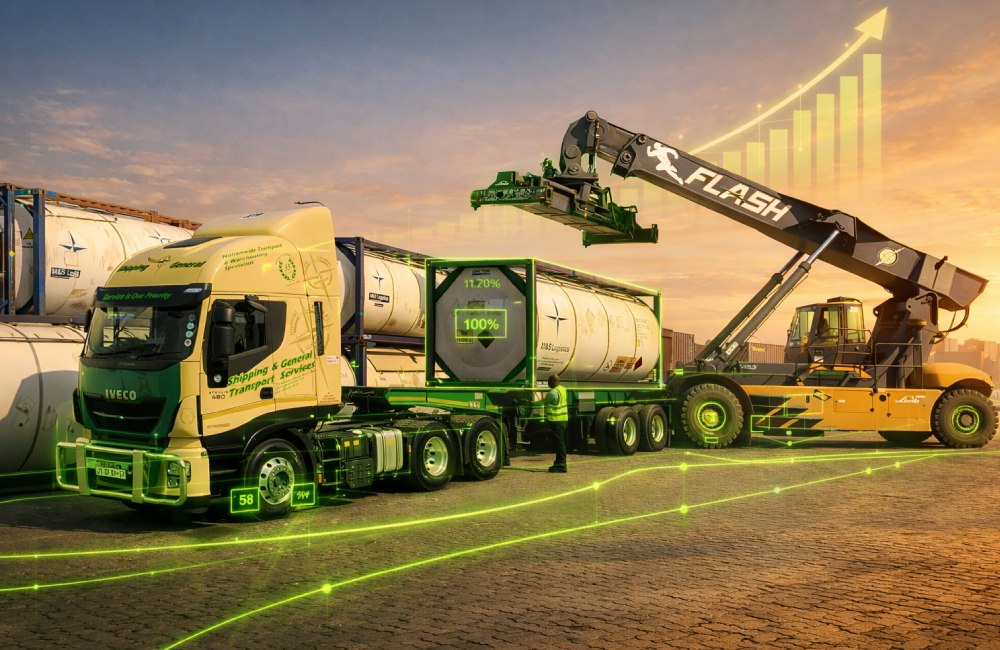
South Africa’s industrial landscape is entering a decisive expansion phase. New logistics parks, manufacturing hubs and infrastructure upgrades are being announced across key economic corridors. However, bricks and steel alone do not drive industrial output. Industrial logistics South Africa is the operational backbone that determines whether these developments succeed or stall.
As new industrial zones emerge in Gauteng, KwaZulu-Natal and the Western Cape, supply chain reliability becomes a board-level concern. Manufacturers cannot afford freight delays. Developers cannot tolerate congestion. Exporters cannot risk missed port windows.
Infrastructure growth without logistics strategy creates bottlenecks.
Strategic logistics integration prevents them.
The Industrial Expansion Reshaping South Africa in 2026
Large-scale property and infrastructure investments are reshaping the industrial sector. Developments near ports, logistics corridors and inland hubs signal confidence in long-term manufacturing and trade growth.
Yet every new warehouse, plant or distribution centre increases transport complexity.
Each facility adds:
- Inbound raw material flows
- Outbound finished goods distribution
- Inter-warehouse transfers
- Cross-border cargo movement
- Port-linked exports
Industrial expansion multiplies freight demand. Without scalable national coordination, inefficiencies escalate quickly.
Why Industrial Logistics South Africa Is Now Strategic Infrastructure
Industrial logistics is no longer operational support.
It is economic infrastructure.
National transport networks connect production to ports. Cross-border freight routes enable regional trade. Warehousing integration supports just-in-time manufacturing models.
When logistics performance declines, output declines.
When logistics scales intelligently, industrial capacity increases.
Decision-makers are therefore prioritising:
- Multi-province fleet coverage
- Reliable long-haul transport
- Integrated warehousing
- Cross-border compliance expertise
- Real-time cargo accountability
Reliability is now competitive advantage.
Logistics Demands of New Industrial Developments
Modern industrial parks demand structured freight planning from inception.
Key requirements include:
- High-volume inbound scheduling
- Dock coordination
- Intermodal transport integration
- Bulk cargo handling
- Abnormal load capability (where applicable)
- Secure overnight freight staging
Industrial developers increasingly require logistics partners during planning phases, not after construction.
Early integration prevents congestion, reduces turnaround times and improves long-term operational flow.
National Distribution vs Regional Carriers
| Factor | Regional Carrier | National Logistics Partner |
|---|---|---|
| Coverage | Limited province | Multi-province & corridors |
| Cross-Border Capability | Often outsourced | Integrated expertise |
| Fleet Scale | Small-medium | Scalable fleet network |
| Contract Stability | Variable | Structured SLA agreements |
| Port Coordination | Limited | Established relationships |
| Risk Mitigation | Reactive | Proactive planning |
Industrial growth demands national coordination, not fragmented providers.
Risk Factors in Expanding Industrial Supply Chains
Growth introduces risk.
Common vulnerabilities include:
- Border delays
- Port congestion
- Fuel volatility
- Cargo theft
- Documentation errors
- Driver shortages
- Inconsistent subcontracting
Without structured oversight, risk multiplies across regions.
National coordination reduces exposure by centralising accountability.
Compliance, Ports & Cross-Border Considerations
Industrial expansion often aligns with export ambitions.
That introduces:
- SARS customs requirements
- Clearing documentation
- Transit permits
- Cross-border insurance compliance
- Port booking windows
- Intermodal scheduling
Delays at borders can disrupt entire production cycles.
Therefore, integrated clearing and forwarding alignment becomes critical.
Cost Efficiency and Operational Visibility
Industrial logistics is not about cheapest rates.
It is about predictable cost control.
Strategic national transport partnerships reduce:
- Empty return legs
- Double handling
- Redundant warehousing
- Last-minute subcontracting
- Emergency rerouting costs
Predictability improves forecasting.
Forecasting strengthens profitability.
Sector-Specific Logistics Requirements
Mining
Heavy bulk transport, abnormal loads, remote site coordination.
FMCG
High-frequency distribution, strict delivery windows, regional penetration.
Manufacturing
Inbound raw materials, outbound finished goods, time-sensitive dispatch.
Industrial Property Developers
Integrated logistics infrastructure planning, access road optimisation, traffic flow modelling.
Each sector requires tailored execution.
Why Scalable National Logistics Partnerships Matter
Industrial growth will not slow.
However, growth without scalable logistics support leads to congestion and inefficiency.
National transport coordination provides:
- Corridor stability
- Route optimisation
- Fleet scalability
- Cross-border reliability
- Structured SLAs
- Risk mitigation frameworks
Industrial logistics South Africa is not about moving cargo.
It is about sustaining economic momentum.
Frequently Asked Questions Industrial logistics South Africa
What is industrial logistics?
Industrial logistics refers to the coordinated transport, warehousing and distribution of materials and finished goods supporting manufacturing and large-scale industrial operations.
Why is national coverage important?
Industrial operations often span multiple provinces and borders. National coverage ensures continuity and accountability.
How does logistics affect industrial development success?
Transport delays disrupt production schedules, increase costs and weaken supply chain reliability.
What industries require industrial logistics?
Mining, manufacturing, FMCG, agriculture, retail distribution and export-focused operations rely heavily on structured logistics networks.
How do companies reduce freight risk?
By partnering with established national providers offering structured oversight and compliance expertise.
Partnering with Shipping & General
Industrial expansion presents opportunity.
However, opportunity without logistics alignment introduces vulnerability.
Shipping & General provides structured national transport coordination aligned to industrial growth requirements. From long-haul freight to cross-border distribution, our focus is operational reliability, compliance precision and scalable execution.
As industrial capacity expands, supply chains must expand intelligently.
Secure your logistics foundation before congestion defines it.
Request a strategic logistics consultation today.