






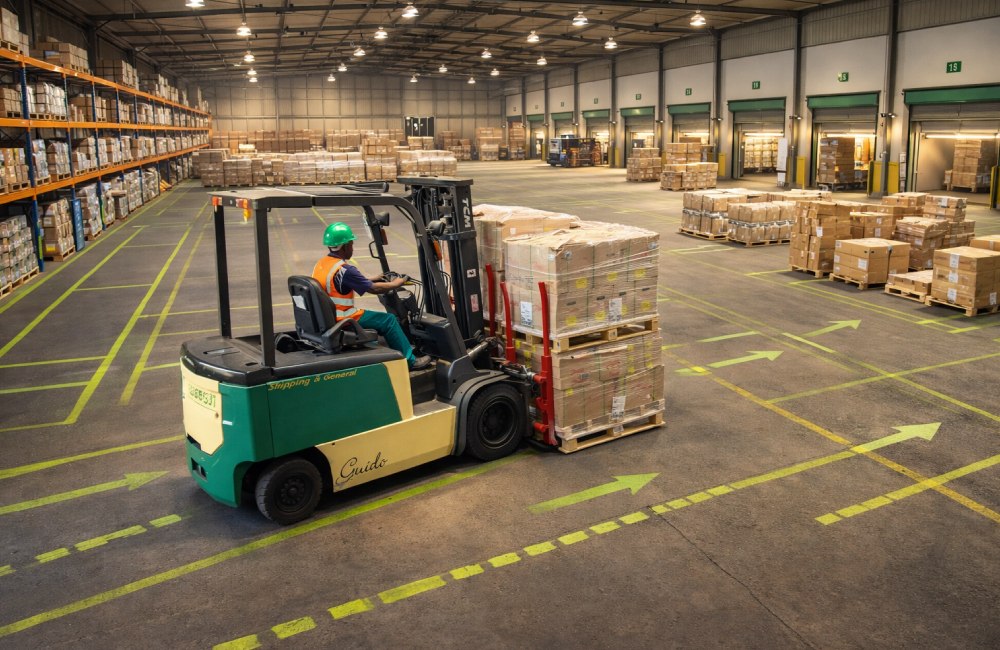
Online retail growth has permanently altered how goods move through South Africa’s supply chain. What was once bulk storage focused is now driven by speed, fulfilment precision and real-time inventory visibility. Ecommerce warehousing South Africa is no longer a passive storage function.
It is an active distribution engine.
As digital marketplaces expand and consumer delivery expectations tighten, businesses must rethink how inventory is stored, processed and dispatched. Traditional warehouse models cannot support high-frequency order fulfilment without structural adaptation.
Those that adapt scale successfully.
Those that delay face bottlenecks.
How Ecommerce Is Transforming South Africa’s Storage Demand
Ecommerce growth has introduced three major structural shifts:
- Higher SKU complexity
- Smaller order sizes
- Faster dispatch requirements
Instead of pallet-based outbound distribution, warehouses now process individual item picking at scale.
Furthermore, online promotions and seasonal campaigns create unpredictable demand spikes. Storage facilities must therefore operate with agility, not static inventory models.
Industrial property expansion reflects this shift, with developers prioritising logistics parks aligned to major transport corridors.
Why Ecommerce Warehousing South Africa Requires Strategic Infrastructure
Ecommerce storage demands more than floor space.
It requires:
- Efficient racking systems
- Structured pick-and-pack zones
- Secure inventory control
- Integrated transport coordination
- Last-mile distribution alignment
Without integrated logistics, warehousing becomes isolated from delivery execution.
National coordination ensures seamless movement from shelf to doorstep.
From Bulk Storage to Fulfilment-Driven Operations
Traditional warehouses emphasised:
- Long-term pallet storage
- Bulk inbound shipments
- Periodic outbound loads
Ecommerce-driven facilities prioritise:
- Rapid order processing
- Daily dispatch cycles
- Real-time stock accuracy
- Reverse logistics handling
The shift transforms storage into an operational nerve centre.
Centralised vs Multi-Node Distribution
| Factor | Centralised Warehouse | Multi-Node Network |
|---|---|---|
| Setup Cost | Lower | Higher |
| Delivery Speed | Slower to remote areas | Faster nationwide |
| Inventory Complexity | Simplified | Distributed |
| Risk Exposure | Single-point failure | Diversified |
| Scalability | Moderate | High |
As online demand grows nationally, multi-node distribution improves service consistency.
However, structured national transport coordination remains essential regardless of model.
Inventory Visibility and Real-Time Coordination
Online retailers cannot tolerate stock discrepancies.
Operational requirements now include:
- Digital stock reconciliation
- Inbound and outbound tracking
- Dispatch confirmation alignment
- Integrated transport scheduling
Without visibility, customer trust declines.
With structured coordination, fulfilment performance improves.
Managing Peak Season Volatility
Ecommerce volumes fluctuate dramatically during:
- Black Friday
- Festive season
- Promotional campaigns
- Product launches
Warehousing partners must scale:
- Labour
- Dispatch capacity
- Transport allocation
- Cross-docking operations
Preparation prevents backlogs.
Reactive expansion creates congestion.
Cross-Border Ecommerce and Import Storage
Many online retailers rely on imported inventory.
This introduces:
- Customs clearance coordination
- Port handling
- Temporary bonded storage
- Distribution staging
- Cross-border returns
Integrated logistics ensures that import flows align with domestic dispatch schedules.
Fragmented coordination increases lead time and working capital pressure.
Cost Efficiency and Operational Scalability
Warehousing cost control extends beyond rent.
Scalable logistics reduces:
- Excess inventory holding
- Double handling
- Delivery duplication
- Emergency courier usage
- Reverse logistics inefficiencies
Structured national distribution improves forecasting accuracy and cash flow stability.
Why National Logistics Integration Matters
Ecommerce success relies on storage and transport alignment.
Warehousing without transport integration results in:
- Dispatch delays
- Route inefficiency
- Courier overdependence
- Fragmented accountability
National integration provides:
- Coordinated freight planning
- Structured dispatch scheduling
- Scalable fleet capacity
- Cross-regional consistency
Ecommerce warehousing South Africa is no longer a property function.
It is supply chain strategy.
Frequently Asked Questions Ecommerce warehousing South Africa
What is ecommerce warehousing?
It refers to storage facilities designed to process high-frequency online retail orders with integrated fulfilment operations.
How does ecommerce change warehouse design?
Facilities must prioritise picking efficiency, dispatch speed and inventory visibility rather than bulk storage alone.
Should ecommerce businesses outsource warehousing?
Outsourcing reduces capital exposure and provides scalable logistics capability.
How does national transport support ecommerce storage?
Integrated distribution ensures faster delivery, consistent routing and predictable dispatch cycles.
What industries benefit most?
Retail, fashion, electronics, FMCG and marketplace sellers rely heavily on structured fulfilment.
Partnering with Shipping & General
Ecommerce growth presents opportunity.
However, opportunity without coordinated logistics introduces operational strain.
Shipping & General provides structured warehousing and national distribution support aligned to modern ecommerce demands. From inbound storage to dispatch coordination, our focus is reliability, scalability and operational control.
As online retail reshapes South Africa’s storage landscape, logistics precision becomes competitive advantage.
Engage Shipping & General to structure your ecommerce warehousing strategy.