






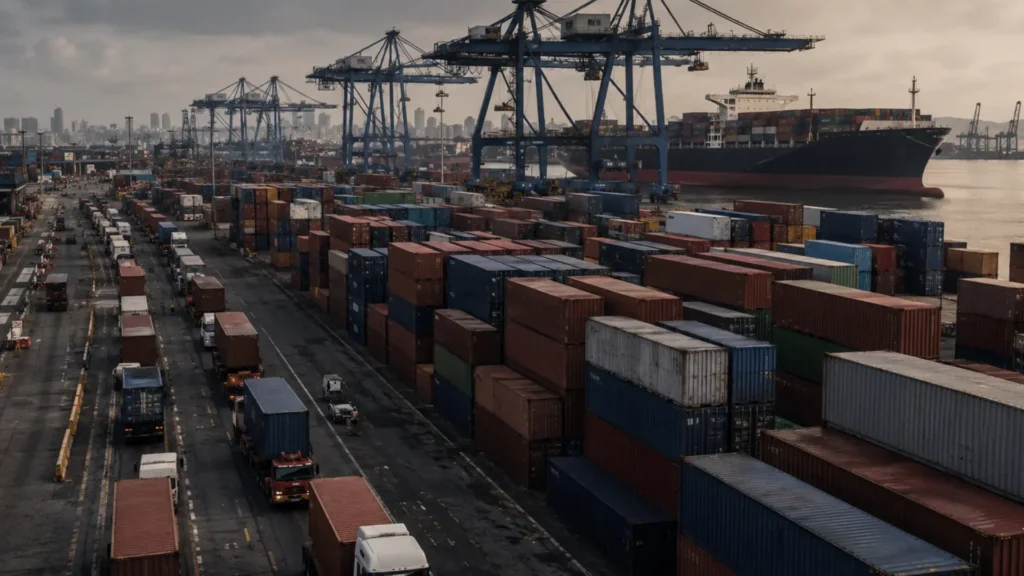
Container Delays South Africa can disrupt far more than an expected delivery date. A container that does not move according to plan can affect stock availability, production schedules, transport bookings, warehouse capacity, customer commitments and cash flow.
For importers, the problem often starts with a simple question: Where is my container, and why is it not moving?
The answer is not always straightforward. A container may face a vessel delay before it reaches South Africa. It may wait for a berth, remain inside a terminal, require customs clearance, undergo an examination, wait for shipping-line release or encounter a transport or warehouse constraint after release.
That means effective container-delay management starts by identifying where the cargo has stopped before deciding what to do next.
Quick answer: When a container is delayed in South Africa, importers should first establish its exact status, confirm customs and shipping-line release requirements, check free-time exposure, coordinate transport and receiving capacity, communicate with customers and identify alternative depot or warehousing options if the original delivery plan can no longer work.
What Causes Container Delays in South Africa?
Container delays in South Africa can arise at almost any stage of the import journey. Some problems originate thousands of kilometres away, while others develop after the vessel reaches a South African port.
Understanding these different stages helps importers avoid treating every delayed container as a port problem.
Vessel Schedule Delays
A container may already run behind schedule before the vessel reaches South Africa. Weather, congestion at an earlier port, vessel rotation changes, equipment issues or changes to a shipping service can affect the planned arrival date.
Shipping lines may also change a vessel rotation when delays accumulate. In August 2026, for example, a scheduled Cape Town call on an India-Africa service changed to Ngqura as the carrier worked to recover its schedule. Import cargo originally destined for Cape Town then required onward movement from Ngqura.
For importers, this demonstrates why an estimated arrival date can change even when the container itself has no problem.
South African Port Congestion
Port congestion can delay vessel berthing, discharge, container availability and landside evacuation.
South Africa’s major container gateways include Durban, Cape Town and Ngqura. Conditions differ between terminals and can change rapidly according to weather, vessel arrivals, yard utilisation, equipment availability and landside demand.
Importers should therefore monitor the terminal relevant to their own shipment rather than assume that disruption at one South African port automatically applies everywhere.
For official operational information, Transnet Port Terminals publishes terminal information covering facilities including Durban, Cape Town, Ngqura and Gqeberha.
Customs Clearance Delays
A vessel may arrive on time and the terminal may discharge the container without difficulty, but customs requirements can still prevent the cargo from moving.
Customs may require additional documentation, verification or inspection before release. Cargo-specific regulatory requirements may add further steps depending on the goods involved.
Shipping & General has previously covered this issue in detail. Importers dealing specifically with customs problems can read Why Is My Container Stuck at Customs? for a deeper explanation of customs-related delays.
Documentation Problems
Incorrect or incomplete documentation can stop a shipment even when every physical part of the journey has gone according to plan.
Importers should therefore check documentation before vessel arrival rather than wait until the container reaches the terminal.
Bills of lading, commercial invoices, packing lists, permits, customs documentation and cargo-specific certificates may all affect the release process depending on the shipment.
Shipping-Line Release Delays
Customs clearance does not automatically mean that a transporter can collect the container. The relevant shipping-line requirements must also be complete.
Outstanding documentation, payment requirements or release procedures can delay cargo even after customs matters have been resolved.
Truck and Transport Delays
A container can be fully released and still remain at the terminal because no suitable truck movement is available.
Transport constraints may involve terminal appointment availability, vehicle capacity, driver scheduling, congestion around port access routes or delays at the intended receiving destination.
This makes transport planning part of the import process rather than an activity that starts only after release.
Container Delays South Africa: First Identify Where the Cargo Is Stuck
When a delivery date slips, businesses often focus immediately on finding someone to blame. A more useful first step is to identify the exact operational stage of the shipment.
Ask one question first:
What is preventing this container from moving right now?
The answer may fall into one of several categories.
The Container Is Still at Sea
If the vessel has not yet reached its South African destination, the importer should confirm the latest estimated arrival and determine whether the carrier has changed the port rotation or schedule.
At this stage, the main business response involves adjusting downstream plans rather than trying to arrange an immediate cargo movement.
The Vessel Is Waiting for a Berth
When the vessel has arrived but has not berthed, the container remains aboard. Importers should monitor berth developments and avoid treating the original discharge date as confirmed.
This is a good time to reconfirm documentation, transporter readiness and receiving capacity so those elements do not create another delay later.
The Container Has Been Discharged but Is Not Available
Discharge from the vessel does not automatically make a container ready for collection.
The terminal may still need to complete operational processes, while customs, shipping-line or other regulatory requirements may still apply.
Customs Has Stopped or Detained the Cargo
If customs requires an examination or further information, the logistics team should establish exactly what officials require and who needs to provide it.
Quick, accurate communication becomes important because simply waiting for the status to change may waste valuable time.
The Container Is Released but Cannot Leave
At this stage, transport or receiving constraints may be the problem. The importer should confirm terminal appointments, truck availability, warehouse receiving capacity and any restrictions affecting the movement.
Why Container Delays South Africa Can Become Expensive Quickly
A delayed container does not automatically create additional charges, but the risk can increase as time passes.
Different parties may apply different charges according to their own terms, tariffs and free periods. Importers therefore need to understand which clock applies to which part of the journey.
Demurrage
Demurrage generally relates to a shipping line’s container remaining at a terminal or designated location beyond the applicable free period.
Because free-time conditions vary, importers should confirm the terms of each shipment early.
Shipping & General’s guide on how to avoid container demurrage charges explains this issue in greater detail.
Detention
Detention generally applies when the importer or consignee keeps shipping-line equipment outside the terminal beyond the agreed free period.
This means a business must plan the complete equipment cycle, not only terminal collection. Unloading and empty-container return can matter just as much.
Storage Costs
Terminal, depot or warehouse storage may create separate costs depending on where the container or cargo remains and which contractual terms apply.
Additional Transport Costs
Schedule changes can also create indirect transport costs. A delayed release may cause a missed delivery slot, require a new truck allocation or affect the next planned movement for the vehicle.
The Cost of Running Out of Stock
For some businesses, logistics charges represent only a small part of the true cost.
A delayed component can stop a production line. A delayed retail shipment can create empty shelves. A late customer order can affect a commercial relationship.
Businesses should therefore evaluate container delays according to their total operational impact, not only the direct freight invoice.
What Should You Do as Soon as a Container Delay Is Confirmed?
The first few decisions can determine whether the problem remains a manageable shipment delay or develops into a larger supply-chain disruption.
1. Establish the Facts
Confirm the vessel, port, terminal, container number, current status, release status and expected next milestone.
Avoid making decisions based only on the original estimated arrival date.
2. Identify the Cause
Determine whether the delay involves the vessel, terminal, customs, shipping line, transport operation or receiving facility.
3. Check Free-Time Exposure
Confirm which free periods apply, when they start and what action the business needs to take before those periods expire.
4. Update the Transport Plan
Tell the transporter immediately when expected availability changes. Early information gives the transport team more opportunity to reallocate vehicles or secure a suitable movement later.
5. Confirm the Receiving Plan
Check whether the original destination can still accept the cargo when it eventually becomes available.
If not, investigate an appropriate depot, unpack facility or warehousing option before the terminal releases the container.
6. Update Internal Teams and Customers
Procurement, sales, operations, warehousing and customer-service teams may all need revised information. Early communication gives each team more time to adjust its own plan.
Practical rule: Do not wait for a delayed container to become urgent before creating a contingency plan. Once you know the original schedule will not hold, start preparing the next workable option.
Why Alternative Depot and Warehousing Options Matter
One of the most useful contingency options involves separating urgent port or container movement from final customer delivery.
The original warehouse may no longer have space. The customer may not accept deliveries over a weekend. A manufacturing facility may need only part of the cargo immediately. Customs status may require specialist handling.
In these circumstances, a suitable depot or warehousing solution can create a controlled intermediate point in the supply chain.
Shipping & General operates customs-licensed container depot and warehousing facilities. Its capabilities include bonded and duty-free warehousing, packing and unpacking, customs examinations, container handling and reefer plug points. :contentReference[oaicite:1]{index=1}
When the Container Is Still Under Customs Control
Importers cannot handle uncleared cargo in the same way as ordinary released goods.
Where the applicable customs procedures allow it, an authorised facility and licensed transporter may provide options for moving or holding cargo while it remains under customs control.
Shipping & General operates a SARS-accredited customs depot and holds approval as a Remover of Goods in Bond. Its facility can receive and unpack cargo that remains under customs control and accommodate uncleared containers while they await final release. :contentReference[oaicite:2]{index=2}
For more detail on the compliance requirements, read What Is a Remover of Goods in Bond?
Is a Container Delay Affecting Your Import?
Shipping & General provides integrated landside logistics solutions for South African importers, including transportation, customs-licensed depot services, bonded warehousing, container handling and related cargo services. If your original delivery plan no longer works, the right alternative may help keep the wider supply chain moving.
The First 24 Hours: Responding to Container Delays in South Africa
Once a business confirms a container delay, the first 24 hours should focus on facts, exposure and options. The goal is not to solve every problem immediately. The goal is to understand what has changed and prevent the delay from creating a larger commercial disruption.
Confirm the Latest Cargo Status
Start by confirming the exact position of the shipment. Is the container still at sea? Has the vessel berthed? Has the terminal discharged the container? Is customs holding the cargo? Has the shipping line released it? Is the problem now transport-related?
A clear status prevents teams from solving the wrong problem. If the vessel has not yet arrived, there is little value in focusing on truck collection. If the container has cleared customs but the terminal has not released it operationally, the response needs to focus elsewhere.
Check All Release Requirements
Importers should confirm customs clearance, shipping-line release, permit requirements and any cargo-specific regulatory obligations as early as possible.
A container delay caused by port or vessel conditions can become more expensive if paperwork creates a second delay once the cargo is otherwise ready to move.
Review Free-Time Exposure
Check the applicable free-time conditions for the shipment. Confirm when the relevant periods start, how long they run and which event triggers the next cost exposure.
This helps the business understand whether immediate action is commercially urgent or whether there is still enough time to manage the delay in a controlled way.
Notify the Transporter Early
Do not wait until the container becomes available before updating the transporter. Early notice allows the transport team to adjust vehicle planning, driver allocation and terminal appointment strategies.
When several delayed containers become available within a short window, transport capacity can quickly tighten. Advance visibility can make a meaningful difference.
Confirm the Receiving Destination
A delayed container may arrive outside the original warehouse or customer delivery window. Importers should therefore reconfirm receiving hours, labour availability, space, unloading equipment and site access.
If the original destination can no longer accept the cargo, identify an alternative before the container is released.
24-hour priority: Establish the exact cargo status, confirm all release requirements, understand free-time exposure and make sure transport and receiving plans still work.
The Next 48 Hours: Build a Container Delay Contingency Plan
If the shipment does not return to its original schedule, the business should shift from monitoring to active contingency planning.
Container Delays South Africa can create problems far beyond the port. A late import may affect warehouse capacity, production, customer orders, promotions, installation teams or distribution schedules. The contingency plan should therefore include operational and commercial teams, not logistics alone.
Rank the Delayed Cargo by Business Impact
If several containers face delays, rank them according to commercial urgency.
Production-critical components, customer-specific stock, seasonal products or goods with limited local availability may deserve greater attention than replenishment stock with healthy inventory cover.
This approach helps the business use limited transport, warehouse space and management attention where they matter most.
Review Inventory Cover
Determine how much usable stock remains and how many days of demand it can support.
This gives sales and operations teams a more realistic picture of the actual business risk. A two-day shipment delay may be manageable if the company has three weeks of stock. The same delay could become critical if production has only one day of material available.
Reprioritise Customer Orders
If stock becomes constrained, the business may need to prioritise contractual obligations, critical customers or orders with the highest commercial impact.
Early decisions create more options than waiting until stock runs out.
Consider Local or Alternative Supply
Where a delayed import threatens production or a critical customer commitment, procurement teams can investigate whether local stock, substitute products or alternative suppliers can cover part of the requirement temporarily.
The alternative may cost more, but the comparison should consider the cost of the disruption it prevents.
Container Delays South Africa: When to Use an Alternative Depot
A container does not always need to move directly from the port to its final commercial destination.
An alternative depot can create flexibility when the original delivery window has changed, the consignee cannot receive the box immediately or the cargo requires unpacking, examination or temporary handling before onward movement.
When the Customer Cannot Receive the Container
The customer may have booked labour, forklifts or production downtime for the original delivery date. A late container can miss that window completely.
A suitable depot or warehouse can create an intermediate point while the importer arranges a new delivery schedule.
When the Importer’s Warehouse Is Full
Delayed shipments can sometimes create the opposite of the expected problem. Instead of cargo arriving gradually, several containers may arrive together once the backlog clears.
That sudden concentration of inbound stock can exceed the warehouse’s receiving or storage capacity.
When the Container Needs to Be Unpacked Quickly
In some cases, moving the container to an appropriate unpack facility can help the importer separate cargo handling from the empty-container return cycle.
Once staff unpack the cargo, the business can return the empty equipment according to the applicable instructions and manage the goods separately.
Shipping & General’s warehousing and container depot services include container handling, packing and unpacking, customs examinations and storage options that can support this type of contingency planning.
What If the Delayed Container Is Still Under Customs Control?
Cargo under customs control requires a compliant solution. Importers cannot simply move uncleared goods to any convenient warehouse.
Depending on the circumstances, customs procedures may allow a licensed operator to move uncleared goods between approved customs-controlled locations.
Removal in Bond
Removal in Bond allows qualifying uncleared goods to move under customs control between approved locations, subject to the relevant SARS requirements and documentation.
This can create additional options when cargo needs to leave one customs-controlled location but cannot yet enter the domestic market.
Bonded Warehousing
A licensed bonded warehouse can hold qualifying goods under customs control while the importer completes the applicable procedures or waits for the appropriate commercial release.
Shipping & General operates customs-licensed facilities and holds approval as a Remover of Goods in Bond. Importers can read more about Removal in Bond and compliant cargo movement.
Important: Customs status determines which options remain available. Always confirm the correct customs procedure before moving uncleared cargo.
The 72-Hour Plan for Container Delays South Africa
If a delay continues beyond 48 hours, the importer should treat it as a business continuity issue rather than only a shipping problem.
Recalculate Expected Delivery Dates
Replace the original delivery estimate with a realistic working date based on the latest operational information.
Avoid repeatedly promising the earliest possible date if the shipment still faces uncertainty.
Review Customer Commitments
Identify which customer orders depend on the delayed stock and communicate revised expectations before customers need to chase for answers.
Transparent communication often protects a commercial relationship better than an unrealistic promise.
Revisit Warehouse and Labour Planning
A new arrival date may require different labour, equipment or storage arrangements. Update warehouse teams before the cargo reaches the gate.
Monitor Potential Cost Escalation
Track demurrage, detention, terminal storage, transport changes, urgent handling and any other costs that may increase as the delay continues.
This gives management enough information to compare alternative solutions on total cost rather than choosing the cheapest individual service in isolation.
How to Communicate Container Delays Internally
Poor internal communication can make a container delay more disruptive than the physical delay itself.
Different departments often need different information, but they should all work from the same confirmed shipment status.
Procurement
Procurement needs to know whether the business should consider alternative supply, revised order timing or changes to future purchase orders.
Sales and Customer Service
These teams need realistic delivery estimates and clarity about which orders the delay may affect.
Finance
Finance may need to understand potential additional logistics charges, cash tied up in delayed stock and changes to expected customer invoicing.
Warehouse and Operations
Operations teams need updated arrival windows, expected container volumes and any special handling requirements.
How to Communicate Container Delays to Customers
Customers generally respond better to early, factual communication than to repeated promises that later change.
A useful update should explain what the delay means for the delivery, provide the best current estimate and confirm when the customer will receive the next update.
Avoid overloading the customer with technical shipping detail unless it helps them make a decision. The commercial question is usually simple: when can they realistically expect their goods?
Container Delays South Africa: Plan for the Empty Container Too
The problem does not end when the loaded container reaches the importer.
Once the cargo arrives, the consignee still needs to unpack the container and return the empty equipment according to the shipping line’s instructions and applicable free period.
A late container may arrive during a period when the warehouse has limited labour or reduced operating hours. If unloading takes too long, the importer can create detention risk after successfully resolving the original port delay.
Confirm the Empty Return Depot
Check the current empty-return instructions rather than assume the depot remains the same as previous shipments.
Plan Unloading Before Delivery
Make sure labour and equipment can unload the cargo promptly once the container arrives.
Track the Final Equipment Milestone
The logistics team should treat empty return as a formal shipment milestone rather than an afterthought.
How Importers Can Reduce Future Container Delays
No importer can remove every source of delay from international logistics, but businesses can reduce their exposure to avoidable disruption.
Prepare Documents Earlier
Review key documentation before vessel arrival so preventable paperwork problems do not delay cargo after discharge.
Build Realistic Lead Times
Plan procurement around realistic shipping variability rather than the fastest historical transit time.
Create Alternative Storage Capacity
Identify overflow warehousing or depot options before the business urgently needs them.
Understand Free-Time Rules
Keep demurrage and detention conditions visible to the logistics team from the beginning of the shipment rather than investigating them after charges start.
Use Reliable Operational Information
Monitor shipping-line notices, terminal information and reputable freight-industry updates when conditions change. The Transnet Port Terminals website provides official information relating to South Africa’s terminal network.
Container Delays South Africa Checklist
Shipment Status
- Confirm the container number.
- Confirm the vessel and voyage.
- Confirm the latest vessel ETA.
- Check whether the vessel has berthed.
- Confirm whether discharge has taken place.
- Check the container’s availability status.
Release and Compliance
- Confirm customs status.
- Check shipping-line release.
- Review permits and cargo-specific requirements.
- Resolve documentation queries promptly.
- Confirm whether customs examination applies.
Cost Exposure
- Confirm demurrage free time.
- Confirm detention free time.
- Check terminal storage conditions.
- Record important dates and milestones.
- Track additional costs as they arise.
Transport and Delivery
- Update the transporter.
- Confirm terminal appointment requirements.
- Confirm the receiving facility.
- Check labour and unloading capacity.
- Identify an alternative depot or warehouse if needed.
- Plan the empty-container return.
Business Continuity
- Review available stock.
- Identify production-critical items.
- Prioritise affected customer orders.
- Consider alternative supply where justified.
- Update customers early.
- Revise internal delivery expectations.
Why Integrated Landside Logistics Matters During Container Delays
Container delays become harder to manage when transport, warehousing, depot operations and cargo handling work as separate disconnected activities.
The importer may secure a container release but have nowhere to deliver it. The warehouse may have capacity but no transport slot. The transporter may collect the box, but slow unloading can create empty-equipment delays.
Integrated landside planning connects these stages and gives the business more options when the original plan changes.
Shipping & General combines transportation, warehousing, customs-licensed depot services, bonded storage, container handling and related logistics capabilities. Learn more about Shipping & General and its landside logistics approach.
Turn Container Delays Into Manageable Exceptions
International shipping will always involve some uncertainty. Weather changes. Vessel schedules move. Terminals face congestion. Customs may request additional information. Trucks can miss planned windows.
Resilient importers do not assume that every shipment will move perfectly. They prepare workable alternatives before they need them.
Early documentation, clear cargo visibility, realistic inventory planning, transport coordination, alternative storage and fast customer communication can turn Container Delays South Africa from a crisis into a manageable exception.
Key takeaway: When a container is delayed, identify what is stopping it, understand the cost exposure and prepare the next workable movement. Visibility and flexibility give importers more control even when the original shipping schedule changes.
Need a Contingency Plan for Delayed Cargo?
Shipping & General supports importers with integrated landside logistics solutions, including transportation, customs-licensed container depot services, bonded warehousing, unpacking, cargo handling and storage. When the original delivery plan no longer works, a coordinated alternative can help keep the wider supply chain moving.
Frequently Asked Questions About Container Delays South Africa
What causes container delays in South Africa?
Container delays in South Africa can result from vessel schedule changes, port congestion, customs requirements, documentation problems, shipping-line release issues, transport constraints and receiving delays. The first step is to identify exactly where the shipment has stopped.
What should an importer do when a container is delayed?
Confirm the container’s current status, identify the cause of the delay, check customs and shipping-line release requirements, review free-time exposure, update the transporter and confirm whether the original receiving plan still works.
How do container delays affect importers?
Container delays can affect stock availability, production schedules, customer orders, warehouse planning, transport costs and working capital. The commercial impact often extends beyond the direct cost of moving the container.
Can a delayed container be moved to another depot?
In some cases, yes. The options depend on the cargo’s customs status, shipping-line requirements, available facilities and applicable procedures. Importers should confirm the correct process before arranging an alternative movement.
Can warehousing help with container delays?
Yes. Warehousing can create a buffer when a delayed container arrives outside the original delivery schedule. Suitable cargo can move into storage and enter final distribution when customers, production sites or other destinations are ready to receive it.
What is demurrage?
Demurrage generally refers to charges linked to shipping-line equipment remaining at a terminal or designated location beyond the applicable free period. Exact conditions vary between carriers and shipments.
What is detention?
Detention generally applies when shipping-line equipment remains outside the terminal beyond the agreed free period. Importers should therefore plan unloading and empty-container return as part of the original transport process.
What happens if customs holds a container?
The importer or clearing agent should establish what customs requires and respond quickly with the correct documents, examination arrangements or other requested information. The appropriate next step depends on the specific customs status of the cargo.
What is Removal in Bond?
Removal in Bond allows qualifying uncleared goods to move between approved customs-controlled locations under the relevant customs procedures and documentation requirements.
How can importers reduce container delay costs?
Importers can reduce avoidable costs by preparing documentation early, monitoring cargo status, understanding free-time conditions, coordinating transport before release, confirming receiving capacity and identifying alternative depot or warehousing options before they become urgent.
How can businesses prepare for future container delays?
Businesses can build more realistic lead times, review safety stock, identify critical imports, maintain alternative storage options, monitor port and shipping-line information and create a clear escalation plan for delayed cargo.
How can Shipping & General help with delayed containers?
Shipping & General provides transportation, customs-licensed depot services, bonded warehousing, packing and unpacking, cargo handling and related landside logistics solutions that can support importers when original delivery plans change.
Need Help Managing a Delayed Container?
Container Delays South Africa can disrupt transport, warehousing, stock availability and customer commitments. Shipping & General can help businesses assess practical landside options when the original logistics plan no longer works.