


To prevent cargo theft between Durban and Gauteng, you have to protect the load at four points: while it waits at the port, on the road, at every handover, and when it arrives. Most losses happen where one of those points is left to chance.
The official numbers are improving, but the risk is still concentrated on this corridor. SAPS recorded 327 truck hijackings between April and June 2026, down 21% on the same quarter of 2025 (SAPS quarterly crime statistics, Q1 2026/27). Gauteng accounted for 219 of them and KwaZulu-Natal for 31 (Freight News, 1 September 2026).
This guide explains where cargo is most exposed on the Durban–Gauteng route and sets out a practical checklist for importers, exporters and freight forwarders.
How Big Is the Cargo Theft Risk on the Corridor?
The Road Freight Association has warned that the decline in reported hijackings masks under-reporting, and that security now makes up about 2.3% of vehicle operating costs, rising to 4.1% for high-risk cargo (Freight News, 1 September 2026). In other words, transporters are spending more to keep the numbers down.
The risk is uneven. Police figures reported by EWN show Ekurhuleni accounted for 37.1% of Gauteng’s truck hijackings in January to March 2026, and 25 of the country’s top 30 truck-hijacking hotspots were in Gauteng (EWN, 10 June 2026). Insurance broker Aon names the N3 and N4 as hotspot routes (Creamer Media, 20 February 2026).
Where Is Cargo Most at Risk?
Waiting at the port
Trucks have been reported waiting between 4 and 22 hours to collect containers in Durban, which increases their exposure to crime (Freight News, 1 September 2026). A loaded truck parked in a queue or on a roadside overnight is a soft target.
On the road
The long haul is where hijackings make headlines, but criminals usually choose times and places where a truck slows or stops. Tracker’s data showed hijackings in KwaZulu-Natal peaked on Wednesdays between 16:00 and 21:00 (Tracker, November 2025).
At handover points
Fraud is as dangerous as force. In June 2026, police seized copper worth R12.68 million at City Deep from three hijacked trucks running on false registration plates, two of which had entered South Africa with fraudulent customs documents (SAnews, 22 June 2026). Every handover where a driver, vehicle or document is not checked is an opportunity.
At the destination
Deliveries that arrive after hours, or to sites with nobody to receive them, often end with a loaded container standing unguarded. Our guide to secure container storage over the shutdown covers the options when your site cannot receive.
How Can You Prevent Cargo Theft? A Shipper’s Checklist
- Limit who knows. Share cargo values, routes and delivery times only with the people who need them.
- Seal properly and record every seal number. Use high-security bolt seals and check the number against the documents at every handover.
- Verify the collection. Pre-advise the transporter’s vehicle registration and driver details, and check them at the gate before releasing cargo.
- Insist on tracking with a backup. Two tracking units on separate networks, monitored by a 24-hour control room, make it harder for one disabled unit to end visibility.
- Match protection to value. For high-value loads, ask for escorts, direct routing and no unplanned stops.
- Never leave loaded trailers in unsecured places. Stage cargo at a secure, licensed depot rather than on the roadside or at a closed site.
- Read your insurance conditions. Goods-in-transit cover often has requirements about tracking, parking and stops.
- Inspect on arrival. Check the seal is intact and its number matches before opening, and photograph the container doors and cargo.
What Should You Do If a Seal Is Broken or Cargo Is Missing?
Do not break the seal further or move the cargo. Photograph the container, the seal and the paperwork, then notify your transporter, your insurer and the police, and record the case number. If the goods are still under customs control, tell your clearing agent immediately so that SARS can be informed.
How Does Shipping & General Protect Cargo in Transit?
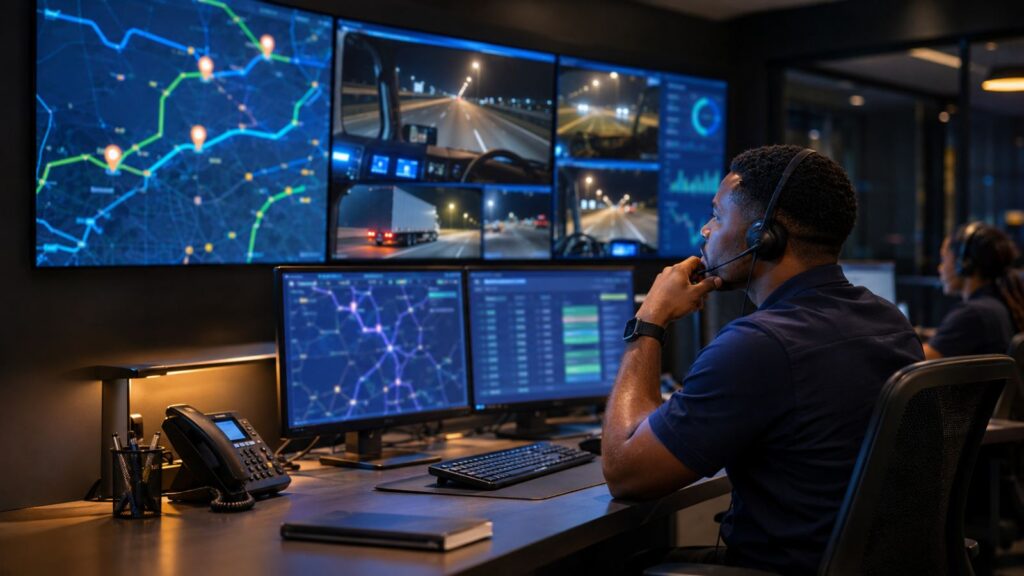
Our Durban–Gauteng container transport is supported by a 24-hour control centre with satellite tracking and video telematics. Long-haul trucks carry onboard cameras and two tracking units on separate networks.
For high-value cargo we provide our own covert escort crews and last-mile delivery by specially trained crews, and our value-added services include a photo service that records cargo condition. Our staff are vetted, and our Germiston depot gives cargo a secure place to wait when a delivery cannot go straight through.
Frequently Asked Questions About Preventing Cargo Theft
Is truck hijacking increasing in South Africa?
Reported truck hijackings fell by 21% in April to June 2026 compared with a year earlier, but the Road Freight Association warns that under-reporting hides part of the problem.
Where are the truck hijacking hotspots?
Gauteng recorded about two-thirds of truck hijackings in April to June 2026, and Ekurhuleni accounts for a large share of the province’s cases. Insurers also flag the N3 and N4 routes.
What is a high-security container seal?
A numbered bolt or cable seal built to resist tampering, usually certified to the ISO 17712 standard. Its number should be recorded and checked at every handover.
Does tracking prevent cargo theft?
Tracking does not stop an attack, but it shortens response times and improves recovery. A second unit on a separate network keeps visibility if one is disabled.
Should high-value cargo have an escort?
It depends on the value, the route and your insurer’s requirements. Many insurers set conditions for high-value loads, so check your policy before you book.
Moving High-Value Cargo From Durban?
Tell us what you are moving, its value band and delivery requirements, and we will propose a transport plan with the right level of tracking, escort and secure staging.
We will brief you on the security measures before the truck is dispatched.