






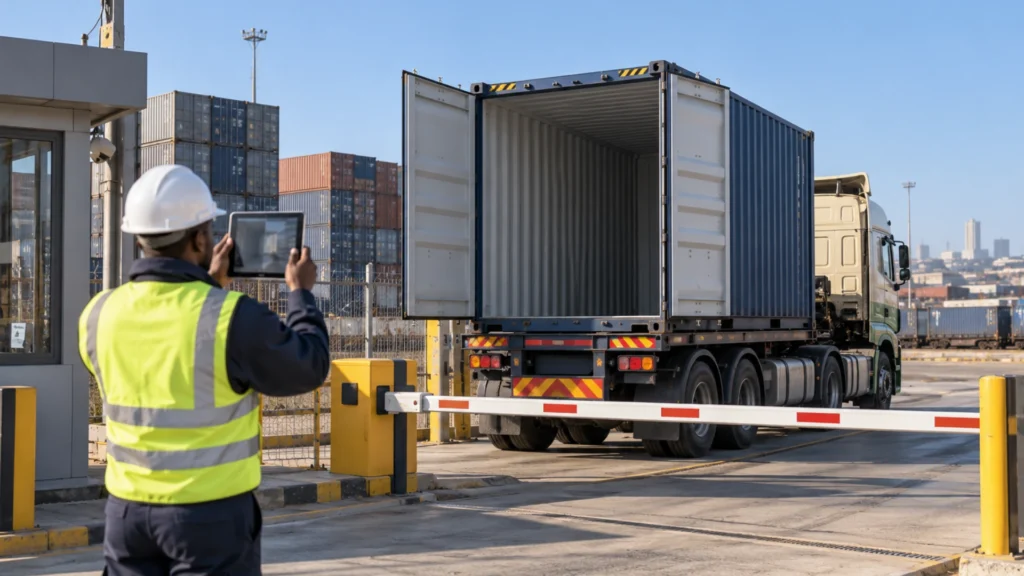
An empty container return in Johannesburg looks like the simplest step in an import. The cargo is unpacked, the box is empty and it only needs to go back to the shipping line. In practice, returning an empty container to the wrong depot, returning it late or returning it dirty or damaged can cost more than the original delivery.
Shipping lines control where their empty containers go. They nominate specific depots for turn-ins, change those nominations as equipment needs shift and charge importers for every day a container stays out beyond the agreed free time.
This guide explains how empty container turn-ins work in Johannesburg, how detention differs from demurrage, what happens at the depot gate and how importers can avoid the most common penalties.
Quick answer: To return an empty container in Johannesburg, check the shipping line’s current turn-in advisory, deliver the clean, empty container to the nominated depot within the detention free time, obtain an equipment interchange receipt at the gate and send proof of the turn-in to the shipping line on the same day.
What Is an Empty Container Turn-In?
A turn-in, also called an off-hire or de-hire, is the return of an empty shipping-line container to a depot nominated by that line after the importer has unpacked it. The turn-in stops the detention clock and hands the container back into the line’s equipment pool for its next export booking.
Inland turn-ins matter in Johannesburg because many import containers are unpacked in Gauteng, hundreds of kilometres from the port. Shipping lines keep empty containers inland at nominated depots so that exporters in the region can collect them for outbound cargo without sending empty boxes back to the coast.
How Do Shipping Lines Nominate Johannesburg Turn-In Depots?
Shipping lines publish turn-in instructions that tell importers exactly where each type of empty container must go. Many lines update these instructions regularly because the depots they use depend on equipment demand and depot capacity.
- CMA CGM publishes an import turn-in guide for South Africa. Its August 2026 guide states that for Johannesburg, “ALL 20’ST /40’ST/HC must be turned strictly into Shipping and General”, with reefers accepted at a separate depot.
- Maersk posts weekly empty import turn-in lists on its South Africa import page.
- Other lines issue customer advisories or include turn-in instructions with the delivery order.
Shipping & General lists CMA CGM, Evergreen, Ignazio Messina and ZIM among the shipping lines that use its Johannesburg depot as an empty turn-in station. Nominations can change, so importers should always check the current advisory for the specific container.
Detention vs Demurrage: Which Clock Is Running?
Detention and demurrage are the two time-based charges that affect import containers. They apply at different stages and stop at different points.
| Charge | When it applies | What stops the clock |
|---|---|---|
| Demurrage | Full container waiting inside the terminal after discharge | Collecting the full container from the terminal |
| Detention | Container outside the terminal, full or empty, beyond the free time | Returning the empty container to the nominated depot |
Maersk defines demurrage as the time full containers spend “inside the terminal”, and detention as the time containers spend outside the terminal until they are returned empty to the port or a depot, according to Maersk’s explainer. Free time varies by line, container type and location. For example, Maersk announced that from 1 April 2025 its Johannesburg import detention free time would be five days for dry containers and four for reefers.
The key point for an empty container return in Johannesburg is that detention keeps running until the empty box reaches the correct depot. Returning it to the wrong place does not stop the clock. For the full-container side of the problem, see Shipping & General’s guide to avoiding container demurrage charges.
What Happens at the Depot During an Empty Container Return?
The depot checks the container at the gate before accepting it. The inspection records the container number, its condition and any damage or contamination.
The Equipment Interchange Receipt
An equipment interchange receipt, usually called an EIR, records the hand-over of a container and can describe its physical condition at that moment, either in the document itself or through photographs taken at the interchange, as described in the Uniform Intermodal Interchange Agreement. The EIR is the importer’s proof that the container was returned, when it was returned and in what state.
Damage and Repair Standards
Depots assess damage against recognised inspection criteria. The Institute of International Container Lessors publishes widely used container inspection and repair standards, including its inspection criteria for dry van containers. Shipping & General’s depot operates a maintenance and repair facility that repairs containers to IICL standard for its shipping-line clients.
Cleaning
Shipping lines expect containers to come back clean and free of cargo residue, dunnage, labels and odours. A container that needs sweeping, washing or chemical cleaning usually attracts a cleaning charge from the line, set out in the line’s local tariff.
What Does It Cost to Return a Container to the Wrong Depot?
Returning an empty container to a depot the line did not nominate can trigger a penalty on top of any detention. CMA CGM’s August 2026 turn-in guide lists penalties of USD 600 per dry container and USD 1 500 per reefer container returned to the wrong depot, and asks customers to send the proof of delivery or drop receipt on the turn-in date to avoid detention and demurrage charges.
Line tariffs change, so importers should check the current local charges of the specific shipping line rather than rely on an old figure.
Can You Reuse an Import Container for an Export?
Container triangulation, sometimes called a street turn, means reusing an empty import container for an export booking instead of returning it to the depot first. It can save a trip, reduce detention exposure and ease equipment shortages.
Triangulation depends entirely on the shipping line’s approval. The container usually needs to match the export booking in size and type, and the line has to agree before the box is reused. A Freight News report described one South African importer-exporter that triangulated hundreds of containers in a year, while noting that shipping lines tightly control container movements and that triangulation can be harder for general cargo.
Step-by-Step: Your Empty Container Return in Johannesburg
- Note the detention free time for the container when you receive the delivery order.
- Plan unpacking so the container is empty well before the free time ends.
- Check the shipping line’s current turn-in advisory for that container size and type.
- Remove all dunnage, packaging, labels and residue from the container.
- Photograph the container inside and out before it leaves your premises.
- Book transport to the nominated depot within its receiving hours.
- Collect the equipment interchange receipt at the depot gate.
- Send the receipt or proof of delivery to the shipping line on the same day.
What Are the Most Common Empty Container Return Mistakes?
- Returning the container to the depot used last time instead of the currently nominated depot
- Waiting until the last free day and then finding no transport or depot slot
- Returning containers with dunnage, lashings or cargo residue still inside
- Failing to photograph the container, leaving no evidence against damage claims
- Not sending proof of turn-in to the shipping line
- Assuming a reefer container can go to the same depot as dry containers
Many of these mistakes happen because the empty return is treated as an afterthought. Building it into the original delivery plan, as described in Shipping & General’s guide to landside logistics in South Africa, avoids most of them.
Frequently Asked Questions About Empty Container Returns in Johannesburg
What is an empty container turn-in?
An empty container turn-in is the return of an empty shipping-line container to a depot nominated by that line after the importer has unpacked it. It stops the detention clock.
Where do I return an empty container in Johannesburg?
Return it to the depot named in the shipping line’s current turn-in advisory for that container size and type. Nominations change, so check the latest advisory before every return.
What is the difference between detention and demurrage?
Demurrage applies while a full container waits inside the terminal. Detention applies while the container is outside the terminal beyond the free time, until it is returned empty to the nominated depot.
What is an EIR?
An equipment interchange receipt records the hand-over of a container and its condition at that moment. It is the importer’s proof of when and in what state the container was returned.
What happens if I return a container to the wrong depot?
The shipping line can charge a wrong-depot penalty and detention may keep running. CMA CGM’s August 2026 guide lists USD 600 per dry container and USD 1 500 per reefer.
Can I reuse an import container for an export booking?
Only with the shipping line’s approval. Container triangulation usually requires the box to match the export booking and the line to authorise the reuse before it happens.
Returning Empty Containers in Johannesburg?
Shipping & General runs a container depot in Germiston that handles empty turn-ins, container inspection and IICL-standard repairs, with its own container haulage fleet for collection and returns.
Speak to the Shipping & General depot team to confirm turn-in arrangements, arrange transport for your empties or book container repairs.