






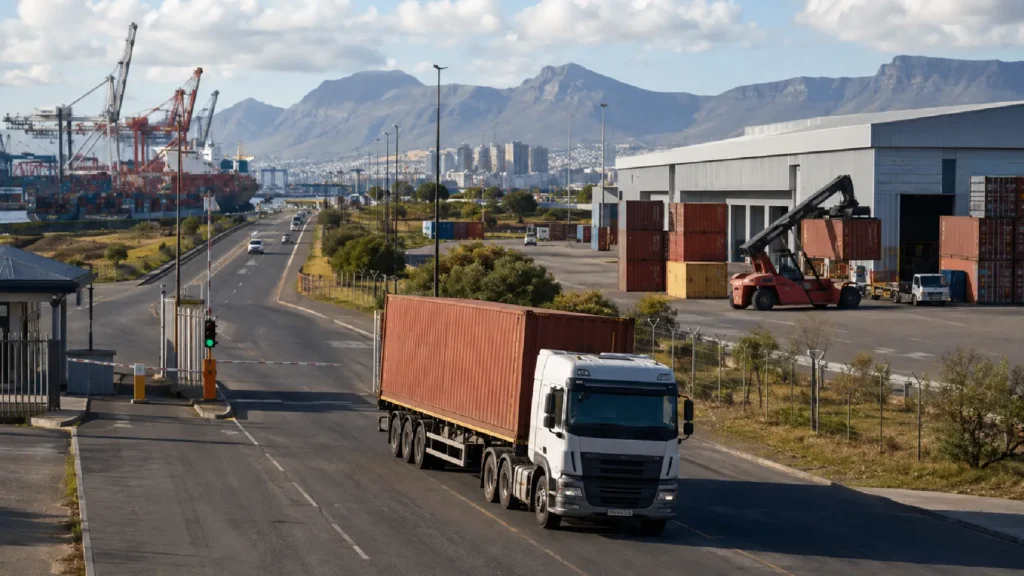
Landside Logistics is one of the most important parts of the supply chain, yet businesses often focus far more attention on vessels, ports and international freight rates.
A container arriving at a South African port does not mean the logistics journey is complete. In many cases, the most operationally complex part is only beginning.
The cargo still needs to move through the terminal, complete the required release processes, connect with road or rail transport, reach a depot or warehouse, undergo handling where necessary and eventually arrive at its final destination.
If any of these stages fail to connect properly, an apparently successful ocean shipment can still become an expensive supply-chain problem.
Quick answer: Landside Logistics covers the movement and handling of cargo between ports, inland terminals, container depots, warehouses and final delivery destinations. Effective landside planning helps businesses reduce delays, improve cargo visibility, control storage and transport costs and respond more quickly when the original logistics plan changes.
What Is Landside Logistics?
Landside Logistics describes the movement, storage and handling of cargo once it enters the inland portion of the supply chain.
For imported container cargo, this can begin before the container physically leaves the port because transport bookings, customs requirements, receiving capacity and delivery planning all need to align with terminal availability.
For exports, the process works in the opposite direction. Cargo needs to move from inland facilities toward the port while meeting vessel cut-offs, container requirements, documentation deadlines and terminal acceptance windows.
Landside Logistics Includes More Than Trucking
Transport is a central part of landside logistics, but it represents only one element of the complete operation.
Depending on the shipment, landside logistics may include:
- Port and terminal collections.
- Full-container transport.
- Less-than-container-load movements.
- Container depot operations.
- Customs-controlled cargo movements.
- Bonded warehousing.
- Packing and unpacking.
- Customs examinations.
- Cargo storage.
- Container handling and repositioning.
- Final distribution.
- Empty-container return.
The value lies in coordinating these activities so that one stage does not become a bottleneck for the next.
Why Landside Logistics Matters After the Port Gate
Businesses often measure shipping performance according to whether the vessel arrived on time. That metric tells only part of the story.
A container may discharge on schedule but then wait for customs clearance, shipping-line release, transport capacity, terminal appointments or warehouse space.
The business therefore receives no value from the cargo until the wider landside logistics chain successfully moves it to where it can be used, sold, stored or distributed.
Port Performance and Supply-Chain Performance Are Not the Same Thing
A port can complete its part of the journey while the customer’s cargo still faces delays downstream.
Similarly, congestion inside the terminal can sometimes create a second landside problem when many delayed containers become available within a short period.
Transporters, depots and warehouses may suddenly need to process a surge of cargo rather than the gradual flow originally expected.
The Supply Chain Continues Beyond Collection
Collecting a container from the terminal is an important milestone, but it is not the final one.
The container still needs to reach its destination, unload successfully and, where relevant, return as empty equipment according to the shipping line’s instructions and applicable free-time conditions.
The Main Components of Effective Landside Logistics
Transportation
Transportation connects the port, container depot, warehouse, customer and other inland facilities.
The transport plan needs to account for terminal availability, vehicle capacity, cargo type, destination requirements and delivery timing rather than simply assigning a truck after release.
Shipping & General provides transportation for full-container and full-truck loads, LCL cargo, dangerous goods, abnormal loads, refrigerated cargo, high-value cargo and other freight requirements. View Shipping & General’s logistics services.
Container Depot Services
A container depot gives the supply chain a controlled location where operators can ground, stage, store, reposition and handle containers away from the immediate pressure of the port terminal.
This flexibility becomes valuable when the original receiving facility cannot accept the container immediately or when cargo requires further handling before final delivery.
Shipping & General’s existing container depot services guide explains how container handling infrastructure supports importers, exporters, forwarders and transport operators.
Warehousing
Warehousing separates the physical container journey from the final distribution schedule.
Instead of requiring a customer to receive an entire container immediately, businesses can unpack suitable cargo into a warehouse and release stock according to operational demand.
This can improve inventory flexibility, help manage unexpected arrival patterns and reduce pressure on customer receiving facilities.
Shipping & General’s warehousing services include customs-licensed depot operations, bonded and duty-free warehousing, packing and unpacking, customs examinations, container depot services, Hazchem facilities and reefer plug points.
Cargo Handling
Different cargo types require different handling solutions. Some businesses need forklifts, reachstackers, tail-lift vehicles, sideloaders, craneage or heavy-lift support.
Planning these requirements in advance prevents a container from arriving at a destination that cannot unload or handle it safely.
Landside Logistics and the Port-to-Warehouse Journey
The journey between a port terminal and warehouse may look simple on a map, but several operational milestones need to align before cargo can move successfully.
Step 1: Cargo Availability
The importer needs confirmation that the container is operationally available and that the applicable release requirements have been completed.
Step 2: Transport Coordination
The transporter needs the correct collection information, vehicle capacity, terminal access arrangements and delivery instructions.
Step 3: Receiving Capacity
The warehouse or customer needs enough space, labour and handling equipment to receive the container when the truck arrives.
Step 4: Unloading and Cargo Handling
The receiving team needs to unload the container efficiently while protecting the cargo and maintaining accurate inventory records.
Step 5: Empty-Container Return
Where shipping-line equipment is involved, the logistics plan should include the final return of the empty container to the designated facility within the applicable conditions.
Key principle: Efficient Landside Logistics does not optimise one movement in isolation. It coordinates collection, transport, handling, storage, delivery and equipment return as one connected process.
How Poor Landside Logistics Creates Hidden Costs
A transport rate may look competitive while the overall logistics process remains expensive.
The true cost of landside logistics includes the effect of waiting time, failed deliveries, storage, demurrage, detention, additional handling, missed production schedules and administrative effort.
Truck Waiting Time
A truck that waits for a terminal, depot or receiving facility loses productive time that could have supported another movement.
Failed or Delayed Deliveries
If a truck reaches a customer that cannot unload the container, the logistics chain may need to arrange waiting time, redelivery or an alternative destination.
Demurrage and Detention Exposure
Poor coordination can allow free-time periods to expire even when the original ocean shipment moved successfully.
Importers can read Shipping & General’s guide on how to reduce container demurrage risk for a more detailed explanation.
Warehouse Inefficiency
Poor arrival planning can create sudden congestion at the warehouse itself. Labour may sit idle while waiting for cargo and then struggle to process several unexpected arrivals simultaneously.
Landside Logistics During Port Congestion
Port congestion tests the strength of the landside network because cargo rarely returns to normal flow in a perfectly orderly sequence.
Once terminal conditions improve, large volumes of previously delayed containers can become available for collection within a relatively short period.
Importers then need transport capacity, depot space, warehouse availability and operational teams ready at the same time.
Create Overflow Capacity Before the Backlog Clears
Businesses should identify alternative depot or warehouse capacity while cargo remains delayed rather than wait until every container becomes available simultaneously.
Prioritise Critical Cargo
When transport capacity becomes constrained, importers can prioritise production-critical, customer-critical or time-sensitive containers rather than process every shipment strictly according to original arrival order.
Keep Transport and Warehousing Connected
Transport planning should reflect actual warehouse capacity. Moving a container out of the terminal only to create a new bottleneck at the destination does not solve the underlying logistics problem.
Why a Container Depot and Warehouse Serve Different Roles
Container depots and warehouses both support Landside Logistics, but they solve different problems.
A Container Depot Manages the Equipment
Container depots focus on activities such as handling, grounding, staging, repositioning, storage and other container-related operations.
A Warehouse Manages the Cargo
Warehouses focus more directly on goods after unpacking, including storage, inventory management and preparation for onward distribution.
Integrated Landside Logistics Connects Both
Transportation creates the link between the port, depot, warehouse and final delivery point. When these functions work together, businesses gain more flexibility over where and when cargo moves.
For a detailed comparison, read What Is the Difference Between a Container Depot and a Warehouse?
Customs-Controlled Cargo and Landside Logistics
Not every imported container can move directly into an ordinary warehouse.
When goods remain under customs control, businesses need to follow the appropriate customs procedures and use authorised operators or facilities where required.
Customs-Licensed Container Depots
A customs-licensed depot can provide a controlled environment for qualifying uncleared cargo, examinations and other customs-related processes.
Removal in Bond
Where the applicable customs procedure permits it, qualifying cargo may move under customs control between approved locations using the required documentation and authorised service providers.
Shipping & General is an approved Remover of Goods in Bond and operates customs-licensed facilities. Its warehousing operations also include bonded and duty-free storage. Learn more about its customs and warehousing capabilities.
Important: Customs status determines how and where uncleared cargo may move. Businesses should confirm the appropriate customs procedure before arranging any movement of goods that remain under customs control.
Visibility Is the Backbone of Landside Logistics
The physical ability to move cargo matters, but so does knowing what is happening while it moves.
Operations teams need reliable information about collection, vehicle movement, delivery status, exceptions and the expected next milestone.
A Single Operational View Reduces Confusion
When separate providers manage transport, storage and handling, businesses may need to gather updates from several different contacts before they understand the actual status of a shipment.
Integrated coordination can reduce these communication gaps and make it easier to respond when conditions change.
Shipping & General uses dedicated client-facing service advisors as a central point for shipment updates and control functions. Its fleet operations also include 24-hour control monitoring, satellite tracking and onboard systems. View its value-added logistics capabilities.
Why Fewer Handoffs Can Improve Landside Logistics
Every logistics handoff introduces another point where information, timing or responsibility can become disconnected.
One provider collects the container. Another receives it. A third unpacks it. A fourth stores the cargo. Another transporter completes the final delivery.
This model can work, but it requires strong coordination.
Where businesses can combine compatible logistics functions through an integrated service provider, they may reduce administrative complexity and improve the flow of operational information.
Shipping & General’s existing guide to choosing a transport company for South African importers also highlights the role of integrated transport, warehousing and depot services in reducing supply-chain complexity.
From Port Gate to Final Delivery
The most successful supply chains do not treat the port gate as the finish line.
They plan the complete inland journey before the cargo becomes available: who will collect it, where it will go, how it will be handled, whether it needs temporary storage and how it will ultimately reach the customer.
That planning is the foundation of effective Landside Logistics.
Need Better Control Beyond the Port Gate?
Shipping & General supports businesses across the inland cargo journey with transportation, customs-licensed depot services, warehousing, bonded storage, container handling and value-added logistics capabilities. Connecting these services can create greater flexibility when port, transport or delivery conditions change.
The First 24 Hours of a Landside Logistics Disruption
When a landside disruption occurs, businesses should avoid reacting only to the most visible symptom. A delayed truck, missed collection or full warehouse may be the result of a problem somewhere else in the chain.
The first 24 hours should focus on establishing the exact cargo status, identifying the operational constraint and protecting the next available movement.
Confirm Where the Cargo Is
Start with the physical location of the container or cargo. Confirm whether it remains inside the terminal, has moved to a depot, is already on a truck, has reached a warehouse or is waiting at another point in the inland chain.
Identify What Is Preventing the Next Movement
The next step is to determine what is actually stopping the cargo. Possible causes include customs status, shipping-line release, terminal access, vehicle availability, receiving capacity, labour, equipment or documentation.
Check Time-Sensitive Cost Exposure
Review demurrage, detention, terminal storage, depot storage and any other time-based charges that may be running. The purpose is not simply to identify cost, but to understand which deadline creates the greatest operational urgency.
Confirm the Next Receiving Point
Before dispatching the cargo, confirm that the next destination can actually receive it. A truck should not leave one bottleneck only to arrive at another.
24-hour priority: Establish the exact cargo location, identify the constraint, understand the time-sensitive cost exposure and confirm a workable next destination before arranging another movement.
The Next 48 Hours: Rebuild the Landside Logistics Plan
If the original plan cannot recover quickly, the business should stop working around an outdated schedule and create a new one.
Prioritise Cargo by Business Impact
Not every delayed shipment creates the same commercial risk. Production-critical goods, urgent customer orders, high-value cargo and perishable items may need to move ahead of lower-priority stock.
Review Transport Capacity
Check whether enough vehicles, drivers and suitable equipment are available for the revised movement plan. If several delayed containers become available at once, normal fleet capacity may no longer be sufficient.
Review Depot and Warehouse Capacity
The next question is where cargo can safely go. If the final warehouse is full or unavailable, an intermediate depot or storage solution may create the flexibility needed to evacuate the terminal without overloading the destination.
Update Customer and Production Priorities
The logistics plan should reflect actual business demand. If a delayed shipment contains components needed for production, or stock required for a critical customer, that information should influence movement priorities.
The 72-Hour Landside Logistics Plan
When disruption extends beyond 48 hours, the issue is no longer simply an operational exception. It becomes a wider supply-chain and commercial problem.
Recalculate Delivery Dates
Replace the original ETA with a realistic delivery forecast based on the cargo’s actual status and the next confirmed movement.
Review Additional Cost Exposure
Extended delays may create additional transport, storage, labour, equipment, demurrage or detention costs. Management should understand these costs early enough to make informed decisions.
Create a Revised End-to-End Plan
The revised plan should cover every remaining milestone: terminal release, collection, depot or warehouse movement, unloading, final delivery and empty-container return where applicable.
Landside Logistics Between Durban and Johannesburg
The Durban-to-Johannesburg corridor plays a major role in South African container logistics because large volumes of imported and exported cargo move between the Port of Durban and Gauteng.
For businesses using this corridor, efficient Landside Logistics depends on more than simply booking a truck for the N3 journey.
Terminal Timing Matters
Collection timing at Durban influences the entire inland movement. Delays at the terminal can change driver hours, delivery windows and warehouse receiving plans in Gauteng.
Long-Haul Scheduling Matters
Long-haul transport requires realistic planning around distance, vehicle availability, driver scheduling, road conditions, customer receiving times and the nature of the cargo.
Johannesburg Receiving Capacity Matters
A successful Durban collection creates little value if the receiving facility in Gauteng cannot accept the container when it arrives.
Shipping & General has operated across the Durban and Johannesburg logistics corridor for decades, supporting long-haul transport, container handling, warehousing and related inland services. Learn more about Shipping & General’s logistics network.
How Transport and Warehousing Should Work Together
Transport and warehousing should not operate as separate planning exercises.
The transport team needs to know when the warehouse can receive, what handling equipment is available and how quickly the container can be unloaded. The warehouse team needs visibility of the expected arrival time, cargo type and unloading requirements.
Schedule Labour Around Real Arrival Times
Accurate transport visibility allows warehouses to schedule labour closer to the actual delivery window rather than rely on outdated estimates.
Match Handling Equipment to the Cargo
Containers carrying machinery, oversized freight, dangerous goods or high-value cargo may need specialised handling equipment. The receiving location should confirm this before the truck leaves the previous point.
Use Warehousing as a Buffer
Warehousing can create a useful buffer between container arrival and final customer demand. This allows businesses to unpack appropriate cargo, return equipment and manage onward distribution separately.
Landside Logistics for High-Value Cargo
High-value cargo needs additional attention because the financial impact of theft, damage, loss or an uncontrolled delay can be significant.
Route Planning
The transport plan should consider the nature of the load, planned route, delivery timing and appropriate security measures.
Vehicle Visibility
Tracking and control-room visibility improve operational awareness by allowing teams to monitor vehicle movement and identify exceptions more quickly.
Secure Handling and Storage
The security plan should continue beyond transport. Depots and warehouses must also provide suitable controls for the specific cargo and risk profile.
Landside Logistics for Dangerous Goods and Specialised Cargo
Dangerous goods, abnormal loads, reefer cargo and specialised freight introduce additional compliance and handling requirements into the landside chain.
Dangerous Goods
Dangerous goods transport and storage require suitable vehicles, facilities, documentation and operating procedures based on the cargo classification and applicable requirements.
Abnormal Loads
Oversized or abnormal cargo may require specialised trailers, permits, route planning, escorts, craneage or rigging.
Refrigerated Cargo
Refrigerated cargo requires additional control over power, temperature, staging and timing. This is why reefer transport, plug-point capacity and technical support need to connect with the wider landside plan.
For a deeper cold-chain perspective, read Shipping & General’s guide to reefer container PTIs.
Why Total Logistics Cost Matters More Than the Cheapest Rate
Choosing a logistics provider purely on the lowest transport rate can overlook much larger costs elsewhere in the supply chain.
The better question is not simply, “What does the truck cost?” It is, “What does the complete movement cost once delays, storage, waiting time, administration, handling and delivery performance are included?”
Include Waiting Time
A low transport rate loses value if vehicles spend excessive time waiting at terminals or customers.
Include Failed Movements
Redeliveries, aborted collections and incorrect routing create additional cost without moving the supply chain meaningfully forward.
Include Storage and Equipment Charges
Demurrage, detention, terminal storage and emergency warehousing can exceed the saving achieved through a cheaper transport quote.
Include Business Disruption
Production stoppages, lost sales, delayed customer orders and emergency procurement can make poor landside planning significantly more expensive than the direct logistics charges suggest.
Shipping & General’s guide on reducing logistics costs in South Africa provides additional context on evaluating logistics beyond the headline rate.
Cost principle: The cheapest individual movement does not necessarily produce the lowest total logistics cost. Evaluate transport, waiting time, storage, handling, risk and delivery performance together.
How to Build a More Resilient Landside Logistics Network
Resilience does not mean eliminating every delay. It means giving the supply chain enough flexibility to continue operating when the original plan changes.
Maintain Alternative Storage Options
Identify where cargo can move if the primary warehouse becomes unavailable or cannot receive the volume released from the port.
Build Flexibility Into Transport Capacity
Businesses should understand how their transport provider can respond when daily volumes increase unexpectedly or delivery windows shift.
Know Which Cargo Is Critical
Create shipment priorities before disruption occurs. Knowing which cargo supports production, key customers or time-sensitive contracts makes emergency decisions easier.
Plan the Empty Return in Advance
The landside journey does not end when cargo leaves the container. Confirm unloading arrangements, empty-return instructions and available free time before final delivery.
Keep Decision-Makers Connected
Procurement, logistics, warehouse, finance, sales and customer-service teams should share the same operational information when a disruption affects cargo movement.
Landside Logistics Checklist
Before Cargo Arrives
- Confirm shipment ETA and expected availability.
- Prepare customs and shipping-line documentation.
- Confirm the transport requirement.
- Confirm warehouse or customer receiving capacity.
- Identify any specialised handling requirements.
- Review demurrage and detention free time.
- Confirm an alternative depot or storage option.
Before Terminal Collection
- Confirm the container is available.
- Confirm customs release where applicable.
- Confirm shipping-line release.
- Confirm terminal access or appointment requirements.
- Confirm the transporter and vehicle allocation.
- Reconfirm the receiving destination.
During Inland Transport
- Track the vehicle or shipment where available.
- Monitor ETA changes.
- Keep the receiving team updated.
- Escalate route or delivery exceptions quickly.
- Maintain any special cargo controls required.
At the Receiving Facility
- Confirm unloading labour.
- Confirm suitable handling equipment.
- Record cargo condition where required.
- Complete inventory or warehouse processes.
- Confirm the next distribution step.
After Unloading
- Confirm empty-container return instructions.
- Check remaining detention free time.
- Arrange the return movement.
- Record final equipment return.
- Close the shipment only after the final milestone is complete.
Why Integrated Landside Logistics Creates More Control
A supply chain becomes more difficult to manage when every stage depends on a different provider, different communication channel and different operational system.
Integrated Landside Logistics can reduce some of this complexity by connecting transport, depot services, warehousing, cargo handling and related support through a more coordinated operating model.
Shipping & General has developed its business around this wider landside role. Its operations include transportation, customs-licensed container depot services, bonded warehousing, packing and unpacking, container handling and specialised value-added services.
That combination gives importers and exporters more options when cargo cannot move according to the original plan.
The Port Gate Is a Milestone, Not the Finish Line
The arrival of a vessel or release of a container does not complete the supply chain.
The business only receives the benefit of the cargo when the inland chain successfully moves it to the point where it can be used, sold, stored or distributed.
Strong Landside Logistics connects each of those steps while keeping transport, depot capacity, warehousing, handling and customer requirements aligned.
Key takeaway: The strongest supply chains plan beyond the port gate. When transport, depot services, warehousing, cargo handling and final delivery work together, businesses gain more control over time, cost and disruption.
Need a More Flexible Landside Logistics Plan?
Shipping & General supports importers and exporters with transport, customs-licensed depot services, bonded warehousing, container handling, specialised cargo solutions and value-added logistics support. An integrated plan can help your business keep cargo moving when conditions change.
Frequently Asked Questions About Landside Logistics
What is Landside Logistics?
Landside Logistics covers the movement, storage and handling of cargo between ports, inland terminals, container depots, warehouses and final delivery destinations. It includes transport, depot operations, warehousing, cargo handling and equipment return.
Why is Landside Logistics important for importers?
A container arriving at port does not mean the supply chain is complete. Importers still need to manage terminal collection, customs and shipping-line release, transport, warehousing, unloading and empty-container return.
Is Landside Logistics the same as trucking?
No. Trucking is one part of Landside Logistics. A complete landside operation can also include container depot services, warehousing, customs-controlled movements, packing and unpacking, cargo handling, specialised equipment and final distribution.
How does port congestion affect Landside Logistics?
Port congestion can delay container availability and then create a surge of cargo once the backlog clears. Importers may suddenly need additional trucks, depot space, warehouse capacity and labour within the same period.
What is the difference between a container depot and a warehouse?
A container depot primarily manages containers and related equipment activities such as grounding, staging, storage and handling. A warehouse focuses more directly on the goods after unpacking, including storage, inventory control and onward distribution.
How can warehousing improve Landside Logistics?
Warehousing gives businesses more flexibility when customers or production facilities cannot receive a full container immediately. Suitable cargo can be unpacked, stored and distributed according to actual demand.
What is Removal in Bond?
Removal in Bond allows qualifying uncleared goods to move between approved customs-controlled locations under the relevant customs procedures and documentation requirements.
Can Landside Logistics help reduce demurrage and detention?
Effective coordination can help reduce avoidable exposure by ensuring containers move quickly once available, receiving facilities are ready and empty equipment returns within the applicable free-time conditions. Charges and free-time rules vary by carrier, contract and shipment.
Why is the Durban-to-Johannesburg corridor important?
Large volumes of imported and exported cargo move between the Port of Durban and Gauteng. Effective planning across this corridor requires coordination between terminal timing, long-haul transport, warehouse receiving capacity and final delivery schedules.
How should businesses measure Landside Logistics costs?
Businesses should look beyond the transport rate and consider total logistics cost. This includes waiting time, storage, demurrage, detention, handling, failed movements, administrative effort and the commercial impact of delayed stock or production.
How can businesses make Landside Logistics more resilient?
Businesses can build resilience by maintaining alternative storage options, understanding transport capacity, prioritising critical cargo, planning empty-container returns early and keeping procurement, logistics, warehouse and customer-facing teams aligned.
How can Shipping & General support Landside Logistics?
Shipping & General supports importers and exporters with transportation, customs-licensed container depot services, bonded warehousing, packing and unpacking, container handling and specialised value-added logistics services.
Take Control Beyond the Port Gate
Strong Landside Logistics connects the port, transport network, depot, warehouse and final delivery destination into one coordinated process.
Shipping & General can help businesses build a more flexible inland logistics plan through transport, customs-licensed depot services, warehousing, bonded storage, cargo handling and specialised logistics support.